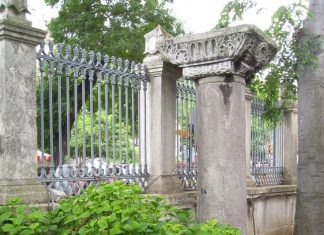
Among all the churches of the Hebdomon, the most deeply revered was the one dedicated to St. John the Baptist, known in Greek as the Martyrium of John the Baptist. This sacred building was a domed church, erected by Emperor Theodosius the Great, and its purpose was to house what was believed to be the head of St. John the Baptist, the heroic Forerunner of Christ.
The possession of such a relic was considered a source of immense spiritual prestige and divine protection. For this reason, the emperors of Constantinople were eager to secure it for the capital and place it in a setting worthy of its holiness The Hebdomon as a Place of Rest and Transition.
Valens and the First Attempt to Obtain the Relic
The first emperor who attempted to acquire the sacred head was Emperor Valens. At that time, the relic was in the care of a group of monks belonging to the sect of Macedonius, who had carried it from Jerusalem to Cilicia. These monks refused to surrender such a precious treasure, fearing either its misuse or removal from their protection.
Valens managed to bring the relic part of the way toward Constantinople, as far as Panticheion (modern Pendik), located on the opposite shore of the Sea of Marmora. According to tradition, the mules drawing the carriage that bore the relic suddenly refused to move any farther. This event was interpreted as a sign of divine will, indicating that the relic was not meant to be carried onward. In obedience to this perceived heavenly command, the head of the Baptist was left at Panticheion.
Theodosius the Great and a Renewed Effort
Later, Theodosius the Great renewed the effort to bring the relic to Constantinople. At that time, it was guarded by a woman named Matrona and a priest named Vicentius. Both resisted the emperor’s intention with great determination. Matrona, in particular, firmly believed that Theodosius would be prevented, just as Valens had been, from removing the relic Private Tours Bulgaria.
Vicentius, hoping to make the emperor abandon his plan, imposed what he believed was an impossible condition. He declared that if Theodosius wished to take the relic, he must walk behind the Baptist, showing humility and reverence before the saint.
The Emperor’s Act of Humility
Theodosius did not hesitate. With deep respect, he wrapped the reliquary in his Imperial mantle, held it before him, and walked humbly behind it, thus fulfilling Vicentius’s condition. He then carried the sacred head to the Church of St. John the Evangelist at the Hebdomon and immediately began the construction of a new church dedicated specifically to St. John the Baptist, intended as the relic’s final resting place.
This act of devotion convinced Vicentius of the emperor’s sincerity, and he followed the relic to the Hebdomon. Matrona, however, remained unconvinced.
Matrona’s Final Protest
Matrona, moved by deep emotion and unwavering faith, refused to accept the outcome. She believed that her trust had been betrayed and that her treasured relic had been taken from her unjustly. As a result, she never set foot in the Hebdomon again, avoiding the suburb entirely for the rest of her life.
Her protest adds a deeply human note to the story, reflecting the intense personal devotion and emotional attachment inspired by holy relics in the Byzantine world.
This episode illustrates not only the religious importance of the Hebdomon but also the profound belief in divine signs, humility, and sacred authority that shaped the spiritual and political life of the Byzantine Empire.