Location South of the Kynegion
A short distance south of the Kynegion stood one of the most important religious institutions of Byzantine Constantinople: the Church and Monastery of Saint George at the Mangana. Its full Greek name shows that it was dedicated to Saint George the Great Martyr and closely connected with the Mangana district.
This monastery was founded by Emperor Constantine IX Monomachus in the eleventh century. Contemporary writers describe it as one of the largest, richest, and most beautiful monasteries in the city. It played an important role not only in religious life but also in imperial politics and ceremonial life Bulgaria Tour.
Evidence for the Site of the Monastery
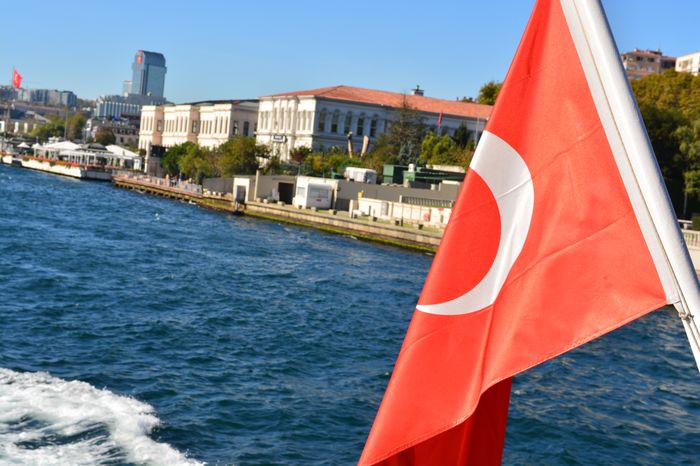
The exact location of the monastery can be identified by several clear historical clues. First, ancient sources state that the church stood opposite Chrysopolis, on the Asian shore of the Bosporus. Second, it was located near both the Mangana and the Kynegion, placing it firmly in the eastern part of the city, close to the sea walls.
Another important detail is that the monastery stood in the middle of open meadows. This information is especially valuable, because most parts of Constantinople were densely built. Only a few areas near the sea walls still had wide open land suitable for gardens and large courtyards.
Gardens, Hospital, and Open Courtyards
The monastery was not only a place of worship. It also included extensive gardens and a hospital, which served the sick and the poor. This combination of religious, charitable, and agricultural functions made it a self-contained complex.
The Spanish traveler Ruy Gonzáles de Clavijo, who visited Constantinople in the early fifteenth century, gives a vivid description. He notes that in front of the church there was a large open court, surrounded by gardens and houses. The church itself stood in the center of these gardens, creating a peaceful and spacious environment very different from the crowded streets of the city.
Why the Site Must Be South of the Kynegion
Such a large and open complex could only exist in a place where enough land was available. To the north of the Kynegion, the ground was narrow, crowded, and already filled with important buildings. There simply was not enough space for wide gardens, courtyards, and hospital buildings Değirmen Kapısı and the Southern Sea Walls.
In contrast, south of the Kynegion there was a broad plain. This open area perfectly matches the descriptions given by medieval writers and travelers. Therefore, historians agree that the monastery must have stood on this southern plain.
Confirmation from Russian Pilgrims
Further confirmation comes from the accounts of Russian pilgrims, who visited Constantinople in the later Byzantine period. They report that the Monastery of the Mangana lay west of the Church of the Holy Saviour.
Later evidence shows that the Church of the Holy Saviour stood near İncili Köşk. If the monastery was west of that point, it would again place it exactly on the open plain south of the Kynegion.
By combining information from Byzantine historians, foreign travelers, and pilgrims, the location of the Church and Monastery of Saint George at the Mangana can be determined with confidence. It stood south of the Kynegion, near the Mangana, facing Chrysopolis, and surrounded by gardens and open land.
This monastery was not only a religious center but also a symbol of imperial generosity and power. Its gardens, hospital, and impressive buildings made it one of the finest monastic foundations in Constantinople and an important landmark in the eastern part of the city.