Home Blog Page 3

Exploring Avian Diversity

0

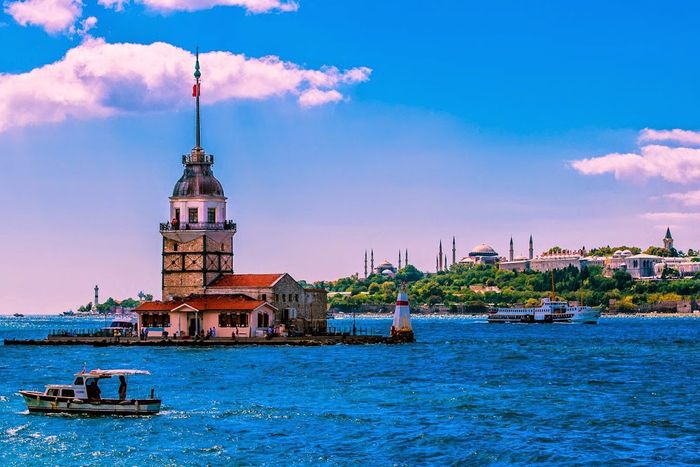
Anadolu Hisarı, also known as the Anatolian Fortress, situated along the Marmara Sea coast, serves as a vital landmark in Istanbul’s birdwatching circuit. With its proximity to forests, wetlands, and the sea, it offers a diverse habitat for a wide range of bird species. In this article, we’ll embark on a birdwatching tour in Istanbul, exploring its rich avian diversity.

Migration Path

One of Istanbul’s notable characteristics is its location on the migration path of birds, particularly migratory soaring birds traveling between Africa and Europe. Every spring and fall, tens of thousands of storks, falcons, eagles, and other raptors pass through the Istanbul Strait. Additionally, marine and water birds utilize the strait as a corridor during their migration from north to south. This unique geographical position makes Istanbul a prime spot for birdwatching throughout the year Exploring Bird Watching Opportunities in Istanbul.

Bird Watching Tour

To facilitate birdwatching enthusiasts, the “Bird Watching Tour of Istanbul” was established, offering visitors the opportunity to explore areas of special interest not covered by traditional tour routes. Led by expert guides, the tour combines sea, foot, tram, and bus transportation, ensuring a comprehensive birdwatching experience.

Key Stops

Park of Gülhane: The urban park is home to various bird species, including green parrots, carrion crows, finches, and sparrows. Visitors can observe Grey Herons nesting in the trees and may even encounter hoopoes while enjoying the scenic view at Sarayburnu Travel Ottoman Bulgaria.

Belgrad Forest: Birdwatchers can explore a designated route around Neşet Suyu, listening to the calls of forest birds while spotting them. With over 25-30 bird species present in the forest, including warblers, woodpeckers, buzzards, and robins, visitors are advised to maintain noise discipline to avoid disturbing the birds.

Büyükçekmece Lake

The tranquil setting of Büyükçekmece Lake offers opportunities to observe both migratory and local bird species while relaxing in various tea gardens along its shores. Visitors can enjoy the serene ambiance while spotting a variety of waterfowl and shorebirds.

Embarking on a birdwatching tour in Istanbul allows visitors to immerse themselves in the city’s rich avian diversity. From urban parks to lush forests and serene lakeshores, each stop offers unique opportunities to observe and appreciate a wide range of bird species. By participating in guided birdwatching tours, visitors can contribute to sustainable tourism while gaining a deeper appreciation for Istanbul’s natural beauty and biodiversity.

Hellenistic world after Alexander

0

Real Judaism in the Hellenistic world after Alexander and under the Roman emperors moved away from some of its original particularism, as its identity and some of its practices followed many real Judaeans who lived far from their homeland. When the general Titus destroyed the Jerusalem temple in 70 CE, much of what it meant to be Jewish was uprooted and ravaged, and still the community lived on and even thrived. Judaism in the later Roman world underwent the most wrenching change in its history, adjusting to the absence of the temple, while retaining its particularity and disinclination to pursue new converts. We will return to the Jewish story on a later page.

Christianity, born and bred in the Jewish matrix, made the rest of the world what it called pagan by detaching the Jewish assertion of uniqueness from place of origin, and opening membership to all humankind. “Go and teach all nations,” Jesus was said to have taught,24 and Christians most often took this teaching quite seriously, even if it didn’t move most of them to relocate and teach in strange lands. They followed in this regard not only Jesus but Paul, for it was Paul’s reading of Christianity—as something far more ambitious than the revival or fulfillment of traditional Judaism—that prevailed in the end.

Christians to make themselves satisfyingly unpopular

Forcing a message of uniqueness and exclusivity allowed Christians to make themselves satisfyingly unpopular. Persecution became their badge of success. Popular imagination probably still thinks of a long period of time in which hard-nosed Roman governors regularly pulled brave, dewy-eyed, idealistic Christians off the streets, tortured them, and then fed them to the lions. The facts are less glamorous, but the influential church historian Eusebius, a fourth-century contemporary and supporter of Constantine, imbued this idea with long life in his account of ten waves of persecution that mirrored Egypt’s ten plagues in the time of Moses. What really happened was episodic, local, and highly inconsistent. The young Christian wife and mother Perpetua suffered such a fate at Carthage around 200, leaving behind a document that would be influential far beyond its time and place (and would have been perfect for Hollywood): The Acts of Perpetua and Felicity, some parts of which she may have written herself customized tours bulgaria.

Occasionally in the third century such things did happen, but most Christians lived and died like their fellow Romans, undisturbed by government, quarreling now and then with some of their neighbors. In the 250 s, the emperor Decius ordered the suppression of Christianity, and in the early 300s, the emperor Galerius launched the most systematic attempt ever to deter and uproot Christian practice. In such times, suspect Chrstians were required to perform some minimal public religious act and get a certificate to prove they had done so. There is no sign that such fits of suppression and persecution had any lasting effect.

Christians resisted persecution well—both the ordinary spasmodic kind and the infrequent broader campaign—because their communities were many-headed, did not have substantial real property, and lived so fully intermingled with Roman society that they could not simply be carved out and attacked. A century after Galerius, when Christian emperors set out to—we might as well use the word—persecute “pagan” communities and practices, they were far more devastatingly effective. They halted the supply of state funds for traditional practices, crippling much of what had been long familiar. Then they seized buildings and banned ritual in them, sweeping the landscape nearly clean of the old ways. What survived—and much did—was personal, small-scale, or highly localized. Over a relatively short time, the new bludgeoned the old into submission and eventually supplanted it.25 That’s what real persecution could do, un-afraid to use violence but not needing to use very much of it. But Christianity never faced anything like what it would later visit on the traditional cults Christian communities of the first three centuries.

Galerian persecution

That last Galerian persecution backfired completely. The young general Constantine (son of Constantius, who had ruled Britain for Diocletian and himself briefly succeeded to an unsteady throne) saw a chance to grasp for power. Diocletian had created a college of imperial leaders and put in motion a complicated system of succession and promotion that collapsed as soon as it was implemented in 305. In a welter of emperors and would-be emperors, Constantine emerged from the pack, establishing himself first in the west, and eventually in all of the empire.

He was the victor of a critical battle in 312 for control of the Milvian bridge, just upriver on the Tiber where it protected the approaches to the city of Rome. Constantine told a story afterward of a vision he had before the battle and how he and his men had fought under Christ’s protection. For the rest of his life—he lived and reigned until 337—he was consistently the best Christian emperor he could be. This is not to say that he was a particularly devout man or even well informed about the distinctive features of his new religious enthusiasm. In many ways, he was perfectly pre-Christian, expecting his new god to support him on the battlefield and in return doing that god favors. If he also showed a brave neglect of other gods, he did so without quite subscribing to the high Christian view that all the others were frauds and worse.

Christian communities of the first three centuries

0

The Christian communities of the first three centuries were what a modern reader should expect them to be. There were active and successful communities, achieving some size and scale in places like Alexandria and Carthage, and at the other extreme forming many small pockets and outposts, seeded by missionary enthusiasm and watered by zeal over the years, but not always surviving. A map of the Roman world showing Christian presence during the years before Constantine would have dots sprinkled like a rash, clustered in Egypt, around Carthage, and in Asia Minor and Syria, with odd clusters here and there elsewhere, and a lighter sprinkling of dots in places like Gaul and Spain. Christianities were everywhere, but a force to be reckoned with nowhere.

I use the surprising plural “Christianities” to speak of this religious movement for good reason. Even in Paul’s letters, the tension between homogeneity and diversity is evident, as when he insists that he speaks of the creed of Christ, not that of Apollo or Paul. This implies that the idea of a unified, coherent Christian community was already powerful, but far from fully realized. Within a very short time, different flavors of preaching about Jesus were growing and spreading. Even those communities expressing friendship and solidarity for others might be found on close examination to be quite different in their beliefs and practices tours bulgaria.

Jewish communities

People speaking of Christ originated in the midst of Jewish communities and continued to use the Jewish scriptures, so we should not be surprised that it was not always obvious just where Jewishness left off and Christianity began, nor was it always important to everyone concerned to make the line obvious. Though both Jewish and Christian communities emphasized tokens and deeds identifying fully committed members, wellwishing, curious, semi-affiliated people also surrounded them in many or most cases. Though both Jewish and Christian teachers preached a single supreme deity, not all of the well-wishers—and sometimes not all of the circumcised or baptized believers—were fastidious about staying away from other religious festivals and communities. Some Christians surrounded themselves with bright, sharp doctrinal lines to keep out all manner of outsiders. Many famous preachers regularly inveighed against lukewarm Christians, pagans, and even Jews in the midst of their flocks: that is to say, people who showed up in church without being quite as zealous about it as others expected them to be. Reality was not so tidy or clear as preachers wished.

This messiness of boundaries in belief and practice was entirely normal. Everyone in the Roman world was religious. On examination, even the most cynical skeptics lived securely within the realm of ancient religious practices. Some worshippers manifested their beliefs in a manner that moderns might call superstitious. But were they really? In our world, is a baseball player who crosses himself before stepping up to the plate devout or just superstitious?

Religion, moreover, was at bottom a technique, sometimes rising to the level of a technology. In a threatening and dangerous world, religious acts provided a measure of control over unseen powers. Only a fool outright refused to participate. The Hebrew scriptures said as much: “The fool has said in his heart, ‘There is no god.’”23 No one at all would disagree. The old Epicureans, believing in a divine force, thought it so lofty and imperturbable that attempts at appeasement were pointless, but they were a tiny minority. Everyone else was doing something to keep divine forces at bay Theoderic at that moment in 519.

Stinging Christian

The word moderns most commonly use for these practices was in origin a stinging Christian insult: paganus, roughly, “hick” or “rube.” A high- or narrow-minded Christian, holding that all religious expressions except the most orthodox were at best folly and at worst demonic, would lump together all those practices (except the Jewish) as pagan, expressing a sniffy social superiority. We would do better to avoid that polemical word entirely. Instead we should speak of old practices, either particular (such as Mithraism, a cult popular among soldiers for some centuries) or general (traditional rites). Doing so makes it easier to see what is distinctive about Christianity—innovation and cantankerousness.

The latter quality derived from the more stiff-necked qualities of Judaism. Judaism takes its name from a place, Judaea, and the ancient word for a member of the cult, Judaeus, meaning “person from Judaea.” Judaean pride convinced itself that the one and only true god visited his temple on a hilltop just at the boundary between cultivated land and the desert, in Jerusalem. Anyone would agree that a provincial god might do such a thing, but to claim that this one local god was uniquely true and powerful—such self-assurance would strike almost everyone as bizarre.

At the heart of Judaism, however, was the Judaeans’ assurance that their god was still local, and therefore that only they should worship him. They made certain that joining his cult—through circumcision—involved a high degree of commitment and difficulty. They argued that Yahweh was the one and only god; yet, ironically, it also did not matter if most of the world owed him no allegiance and went on about their many-godded ways. Yahweh was the highest and the greatest, but he was not the only, god-

Theoderic at that moment in 519

0

Theoderic at his peak, Theoderic at that moment in 519 when he thought he had it all arranged and could gaze on his son-in-law, the consul Eutharic, and his grandson Athalaric, and see the future of dynasty and empire, was no fool. If he believed, as I surmise he did, that the emperor would soon recognize him or Eutharic as legitimate emperor in the west, then everything else about his policies and career makes sense. His confidence may have been misplaced, but many other emperors, some of them equally happy with their offspring and prospects, were equally wrong.

The possibility that lay before him then was an unbroken continuation of Roman imperial civilization in its homeland. The bad days were over. There were, of course, dangers to be deterred—as there had always been—but order had returned. (Ironically, in his own failure to think beyond the borders, Theoderic became the most Roman of them all—the Roman world was enough for him.) Within the traditional domains of Rome, order and empire were reestablishing themselves. The Vandals in Africa and the Visigoths in Spain held independent, geographically coherent, reasonable kingdoms, and administered them as well as at least some previous Roman emperors could claim to have done, though the growth of cities and building seems to have ended in much of Spain about the time the Visigoths arrived. The Franks in Gaul were at this moment the least defined players on this stage, but in the long run, as we will see, the most Roman. Theoderic died with Liberius in command in Gaul of his own province, very likely historically aware that the territory he held was not so unlike the original Roman provincia in southern Gaul (whence the name Provence today) that had sufficed until Julius Caesar’s ambitions drove him north to the Low Countries, the English Channel, and beyond.

There was work to be done—no question about that—but much had been done, and the west was in far better shape than at any time since the death of Stilicho over a century earlier coastal bulgaria tours.

By comparison, Constantinople was a wild card in Theoderic’s calculations. For most of his reign, Anastasius was at the helm. He was a sane, rational man, a man much like Theoderic—his military upbringing had started in the Balkans but took him early to Constantinople and the court; his own religious views were at the margins of what his society would accept, and he therefore had learned to navigate with skill shoals that others would not encounter. But in 519, Anastasius died at the great age of eighty-eight after a twenty-seven-year reign (people were already calling him elderly when he took the throne), and Justin, a very different kind of man, succeeded him. Another soldier from the Balkans, but one without polish or presence, Justin had none of Anastasius’s tact. If Roman civilization was at risk in the early 520s, the threat its leaders had most to watch was one that came from the capital city itself.

CHRISTIANS AND CHRISTIANS

Many modern readers know at least something about barbarians and the fall of the Roman empire, but many more readers will know a fair amount about early Christianity. To such readers I must now say, Would you please leave everything you think you know about Christianity at the door? We really must start over.

A Roman historian writing about the reign of Trajan or Marcus Aurelius, 100 years or so after the lifetime of Jesus, will customarily dismiss the early Christians with a few paragraphs at most. Church historians can and will tell you much more, much of it grounded in hard evidence, about the fate of the Christian religions in that period, but those stories were played out well away from the narrative center of historical attention, in places where Jews and Christians, and their friends and neighbors, were sometimes not all that easy to distinguish from one another, and where not many of the rich and privileged people who wrote the books that survived even bothered to try to distinguish them  Hellenistic world after Alexander.

By the fourth century, historians must pay much more attention to Christians of various stripes and their doings. No reader has to search very far to find stories about the triumph of Christianity after Constantine, and it is common to speak of the Christian Roman empire from the fourth century forward. Such expressions have made it harder to see how transformative and revolutionary were the reigns of Clovis and Justinian in the sixth century, for it was they who invented Christian empires.

Until the sixth century and Justinian’s interventions, official Christianity was much more modest than what it became. It was intrusive and bizarre by our modern standards, but still a far cry from the integrated church-states that followed. If we have not spoken more of religion in Theoderic’s world it is because he was the last of the old Roman Christian rulers, remarkably traditional in beliefs and practices.

Before any attempt to describe the religious landscape of Theoderic’s time and the changes to come, it will help to state explicitly what the triumph of Christianity consisted of, for the truth is mildly surprising.

Vultures serving only Galerius

0

“We see too little of you these days, nephew,” Marios greeted him warmly. “Are your duties so onerous?”

“Not so much my duties as my cares,” Constantine admitted. I suppose you are familiar with what is happening in the palace.

“A flock of vultures serving only Galerius have come to roost there. Have they attacked you?”

“Not directly yet. It’s Mother I’m troubled about, her and her Christian friends.”

Christians of Drepanum

“Helena is too close to the Christians of Drepanum for her own welfare,” Marios agreed. “But we are a family of strongminded people and I haven’t been able to persuade her to give them up.” ‘Is she a Christian herself?”

“I asked her that question not over a month ago and she assured me she is not.” Marios looked at him keenly. “What about you? Dacius told me about the young priest of Caesarea and Antioch.” “Eusebius?” Constantine smiled. “He is naive enough to believe their god is working through me.”

“Then you are not tempted to follow the man they call Christ?” A familiar picture came into Constantine’s mind at his uncle s words, the first time it had been there in many months. It was the face of the slender shepherd with the wise and understanding eyes that seemed not only able to penetrate one’s soul but also to bring assurance and comfort in times of uncertainty.

“I saw a painting of the man they worship on the wall of a ruined church at Dura on the Euphrates,” he said. “He must have been quite different from other men.”

“Different enough to invite his own death on the cross and the deaths of thousands who have followed him since,” Marios said shortly. “Put his face from your mind and choose some easy faith, like the worship of Mithras.”

“Why?”

“Diocletian might die any day; for all I know, Carinus may be poisoning him slowly with some subtle medicine on the orders of Galerius. When that happens, you will be the son of an Augustus and probably a Caesar.”

“Fausta thinks Galerius will try to have me killed when the Emperor abdicates.”

“She is probably right,” Marios said soberly. “An alliance with the house of Maximian would do you no harm. Of course their blood line is weak but yours is strong enough to overcome it. Do you expect either Maximian or Galerius to favor the match?” Constantine shook his head glumly. “Emperor Maximian made that clear before I left Rome. Only Diocletian could force him to give Fausta to me, and they are pushing me farther from him every day. Unless I’m wrong, a decree will be issued tomorrow starting a new campaign of persecution against the Christians and I shall be charged with carrying it out, at least in Nicomedia. I’m sure Carinus arranged it, hoping I will refuse.”

Read More about Christians invoked the power

Lucius Catullus grimly

0

“The Emperor was concerned about the arsenal at Damascus,” Constantine explained. “And he wanted to know what is really happening on the Persian frontier.”

“The arsenal should be safe, for the moment. Narses will be busy for a while; the Roman retreat began only a few days ago.” “Retreat!” Constantine exclaimed. “Where?”

“To Antioch, if rumors are true,” said Lucius Catullus grimly. “Perhaps even to the port of Seleucia, or into the sea. The way I heard it, Galerius was in such a hurry to win a victory in Persia that he used green troops from Cilicia and Syria Palaestina to make up his army, leaving his veterans behind to hold the Danube fortifications, lest the Goths decide to visit Greece again. As an old veteran, Dacius no offense meant, Tribune you can imagine what happened when such a rabble began the march from Carrhae to the Euphrates.”

“It would have been a kindness to cut their throats first,” Dacius agreed. “Those curved swords the Persian cavalrymen use can slit a man’s gullet before he knows what’s happening to him, so I imagine plenty have been cut since.”

“Then you have no idea where the battle lines really are?” Constantine asked.

Lucius Catullus said

“Or if any line exists,” Lucius Catullus said. ‘We have been waiting here for the Persians to come, after they finish with Galerius. My advice to you, Tribune, is to recross the river and ride for Antioch.”

“Out of the fighting entirely?”

“But alive,” the centurion said and added earnestly, “Don’t risk five hundred horse on a battle that is lost already; they may be needed to save Antioch.” He turned to Dacius. “Don’t you agree?”

“The decision is Tribune Constantine’s,” Dacius said, his eyes never leaving the younger man’s face. “He alone is responsible to Diocletian for our ala.”

“But discretion is still the ”

“Unroll the map, Dacius, and let me see what lies north of here,” Constantine interrupted crisply.

Dacius opened the map and the three of them studied it. “I thought I remembered two roads to the north,” Constantine said after a moment. “But I see only one leaving here.”

“The way forks about two or three hours’ ride to the north,” Lucius Catullus explained. “One route goes eastward, the other westward to Antioch.”

“Can we cross the Euphrates at a point where the Persians might not be in force? I don’t want to be caught with the river between me and Antioch and no way to cross.”

Read More about Tribunus Primi Ordinarius

Tribunus Primi Ordinarius

0

Again there was a brief colloquy, at the end of which Josiah reported: “He knows of a caravan route to the neighborhood of Circesium that is little used, sir. The way is rough, though passable, and will cut several days off the longer journey. But he would have to be paid for the caravan he has just brought here, since it will go no farther.”

“Isn’t your father a merchant?” Constantine asked Josiah.

“Yes, noble Tribune.”

“Flavius Valerius Constantinus, Tribunus Primi Ordinarius, on a mission for the Emperor, asks admission to the fortress,” he announced.

Constantine meticulously returned

Nothing happened for a moment, then the gate of the fortification was pushed open and a stocky centurion in full uniform, followed by two legionaries bearing banners similar to those Constantine had displayed, strode through it. He came to a position of attention in the open space before the gate and gave the clenched fist salute of the Roman soldier, which Constantine meticulously returned.

“Lucius Catullus, Centurion of the 14th Cohort, commanding the garrison,” he announced. “Enter with your men, Tribune Constantinus. The stables are empty, but there is grain and fodder for your horses.”

When the ala was inside the fortress, Constantine and Dacius joined the centurion in the headquarters of the garrison.

“I suppose you’re wondering why we didn’t greet you with open arms,” Lucius Catullus said. “But I have always followed the principle of si pacem vis habere para bellum.”

“If you want peace, be ready for war,” Constantine repeated approvingly. “It is an excellent motto.”

“True, the fighting is somewhere to the north of us, if there is still any war,” Lucius Catullus continued. “But with the Persians on our doorstep, it’s just as well not to let them know I have emptied the garrison of all but a few household troops and sent them north to help Caesar Galerius.”

‘Then he is in trouble?” Constantine asked quickly. “We heard rumors of it.”

“If the gossip in the market place is to be believed and it’s usually several days ahead of official dispatches the Emperor’s soninlaw is about to be routed,” Lucius Catullus said. “I expect any day to be forced to retreat toward Antioch to save the skins of the few men I have left, to say nothing of my own.”

“Was it Carrhae all over again?” Dacius asked.

“Something like it, from what I hear. The Persian soothsayers have always been wiser than ours. They must have told Narses that Galerius would strike at the center instead of retaking Armenia. But why were you sent here?”

Read More about Josiah did not quibble

Josiah did not quibble

0

“Tell him to buy the caravan from this man and resell it later for what he can get. He will be paid the difference with a draft on the Imperial Treasury.”

“It shall be done, sir.” Josiah did not quibble, but departed with the caravan master.

Constantine watched silently while Dacius rolled up the maps and put them back in their container. He was waiting for the old centurion’s verdict on his proposed action, but when Dacius spoke, his words were more of a soliloquy.

“So the young eagle spreads its wings,” he said with a smile, then added: “We shall soon see how sharp are its claws.”

Days of habd riding lay behind Constantine and his command when they drew rein on the west bank of the Euphrates, not far from where the great river angled sharply northward toward the Taurus mountain range. At this point they were a good day’s ride west of their original destination of Circesium, where the eastern Roman frontier crossed the Euphrates.

Roman province of Syria Palaestina

The decision to turn northward had been made on the basis of disturbing rumors concerning a Roman disaster, which they had heard at an oasis on one of the ancient caravan routes by which the people of the TigrisEuphrates basin had communicated with what for centuries had been called Canaan, but was now the Roman province of Syria Palaestina. Across the broad flood of the Euphrates they could see the walls of the Roman fortress guarding the area, but it appeared to be strangely deserted.

“What do you make of it?” More and more as the days passed the younger officer had assumed the habit of command with the full approval of the grizzled centurion, who had been the first to realize that the fledgling was now fully able to leave the nest.

“Either they have evacuated the fortress,” Dacius said, “or they expect to be besieged.”

“We’ll cross and see which it is. Send three turmae over to hold the east bank and scout the countryside.”

So close had horses and riders become in the weeks since they had left Egypt that the crossing was accomplished almost without command. Constantine went over with the first of the men and, when all were across, ordered the trumpeter to marshal the troop into formation in a single column. Then, with the eagles of Rome at the head of the column and their banners proudly flying in the afternoon breeze, they approached the fortifications guarding the river crossing. They were still a good arrow range from it, however, when Constantine ordered the column to halt and rode up almost to the gates of the palisaded area that was typical of a Roman frontier fortress. He was accompanied only by his two standard bearers and, at his nod, the trumpeter blew a blast.

Read More about Lucius Catullus grimly

Run and flee to this human nature

0

Orthodox: We did not only ask where is the place that you say the human nature is, but also if it is counted and is in the Trinity and with the Trinity or not. For you said that [the humanity] is not believed to exist in the Trinity as a hypostasis is in a nature because the humanity is not as one of the hypostases which are in the nature of the Trinity, which are of the same nature. For what is not reckoned as a [hypostasis] by number and by convention (although it is not of the same nature) has no existence, even if it is numbered along side of one of the [hypostases]. But if [the humanity] is numbered along side all of them, as it is numbered along side of one, [then] it is established clearly that you confess a quaternity.

Nestorian: Let no one slanderously ascribe a quaternity to us, because it is foreign in word and thought to our doctrine. For how is [your accusation that we teach a quaternity] confirmed concerning us, when we confess three hypostases established and existing in one Divine nature? And the [human] hypostasis, which we say is other than the [three] and their nature, we do not place in [their] number. For the human hypostasis is known and counted in the place where it exists. But this is in one of the Trinity, and not in the whole of the Trinity, or along with it. But if not, then also the human nature, which is acknowledged by you, is established in the whole of the Trinity, and it is numbered with the general nature of Divinity.

Doctrine of a human hypostasis

Orthodox: You run and flee to this human nature which we affirm, without explaining a reason for accepting your [doctrine of a human hypostasis] which you care for. For the fact that [not numbering the human nature in one of the Trinity] would [lead to] the whole Trinity generally possessing the human nature, does not need to be proven by either our arguments or yours. But this last thing which you say, that the [human nature] is not numbered with the Divine nature, this is well known, because [the human nature] receives the number of its natural knowability from its belonging to the hypostasis of the Son. Thus, whether it is reckoned along side of the hypostases of the Father and the Spirit or along side the common nature of the Trinity, it receives the number of its knowability [from the Son]. But if there is also a [human] hypostasis as you affirm, then in the same way that its nature is [united] with the nature of Divinity [in Christ], so its hypostasis [would] also be counted with the three hypostases which are in [the Trinity].

Nestorian: Is the God Word born from the Virgin naturally or by grace?

Orthodox: Naturally when as a man, but by grace and by the economy of union as God. But tell me yourself whether a hypostasis is born which is not confessed to be the Son?

Nestorian: It is known that every hypostasis which is born is confessed to be the son of that from which it is born.

Orthodox: Therefore when you confess two hypostases, and it is clear that you say that there are [separate] births for them, one from the Father and another from Mary, you are confessing two sons.

Nestorian: We confess and are zealous for one sonship and person in these two hypostases.

Orthodox: Then tell me do you say that this one sonship which you confess is natural to both hypostases or to one alone? If it is the former, behold two sons and two Christs equal in nature. But if it is the second, there remains one of the hypostases which is not called son or begotten.

And again it is asked: Is a hypostasis born without sonship? and if there is sonship to every hypostasis. Clearly because of this there are two sons.

Read More about Just as the nature of the Trinity

Just as the nature of the Trinity

0

Orthodox: May we never say or think concerning the eternal nature of the Trinity, equal in essence, that, because the economy was completed, it receives a doubled number becoming two natures. But the nature of the Trinity remains as it is in its unity, not receiving the doubled number of another nature.

Nestorian: Just as the nature of the Trinity, equal in essence, is not doubled in our mind and understanding when it received the additional number of two natures on account of the mystery of the dispensation of Christ, who is perfect God and perfect man at the same time, not the same [in nature] although one [in person]. In the same way, let us hold to this understanding and be confirmed by it that the Trinity is not made four, and does not receive the addition of number of another hypostasis by the economy of the person of Christ, who is two natures and two hypostases. But the Trinity subsists in the equality of its essence, and it is eternal and everlasting. Also the mystery of the economy remains and exists as [Christ] does. Two natures and two hypostases are united inseparably, continuously, and forever in the unity of person in the womb of the Virgin from the beginning of the formation of the body by the anointing and strength of the Holy Spirit.

Apart from the Trinity

Orthodox: Where therefore do you believe remains and is the other hypostasis of Christ? Is it apart from the Trinity or is it among the hypostases of the Trinity?

Nestorian: Everywhere that you think that there is the human nature of Christ, there is the human hypostasis. We believe that Christ in His human nature is in heaven, as was announced to us and we learned from the holy angels by the blessed Apostles, “This Jesus who is ascended from you to heaven, thus shall He come as you saw Him go up to heaven.” [Acts 1:11] Thus we say concerning the form in which Christ is now on account of His corporeality. But concerning the other thing which you asked, whether Christ is outside of the Trinity or within the Trinity, thus we believe that there is no place outside of the Trinity, so that one could say that the nature and hypostasis of the humanity of Christ is there. Also, it is not within the Trinity as in a place, but it is not in the Trinity as a hypostasis is in a nature. For the flesh of Christ is not of the same nature as the Father and the Holy Spirit, but it is believed that it is with the Word of God only by conjunction in an inseparable unity.

Read More about Natural hypostasis of the Word